
 selcukaker
Monthly design support for your company
When design needs are regular, finding a supplier for each job wastes time: the brief is re-explained every time, the brand language drifts a little further, and the price becomes a negotiation again. A monthly arrangement turns this into a flow — requests enter one queue, the order is visible, and capacity is written down. Ongoing graphic design support involves more than agreeing on a monthly image count. I prioritise requests, separate original designs from format adaptations, and identify the person responsible for approval at the outset.
Who this is for
- Marketing teams with a few design jobs a month who don't want to source a supplier each time.
- Companies with an in-house designer who can't keep up during busy periods.
- Brands whose production load multiplies during campaigns.
- Teams bothered by the brand language slipping a little with every job.
What I usually find
- Every job goes to a different supplier, so the brief is explained from scratch each time.
- For small jobs, getting quotes takes longer than the work itself.
- When something urgent appears, nobody knows who is available when.
- Source files live in different places; last year's work can't be picked back up.
- A monthly agreement exists but what's included was never written down, so it's argued about monthly.
Scope and deliverables
Which job types are included is written down up front. If a type outside that scope comes up, it's discussed separately — never added quietly.
- Request queue: jobs enter in one place, with order and status visible.
- Campaign and advertising design, with channel adaptations.
- Social media visuals: post, cover and story layouts.
- Corporate materials: document templates, presentation layout, stationery.
- Catalogue, brochure and price list pages.
- Channel materials: roll-ups, exhibition graphics, billboards, vehicle wraps.
- Print preparation: colour profile, bleed and resolution checks.
- Source file order: work kept findable and reusable.
- Monthly summary: what was produced, what's in the queue.
I make the call; the system speeds it up
For ongoing production, I set priorities around the brand’s communication calendar. I review each request against the established design language and track revisions and deliveries in one queue. Creative direction and the final file review remain my responsibility.
Meet the AI teamExamples from continuous production
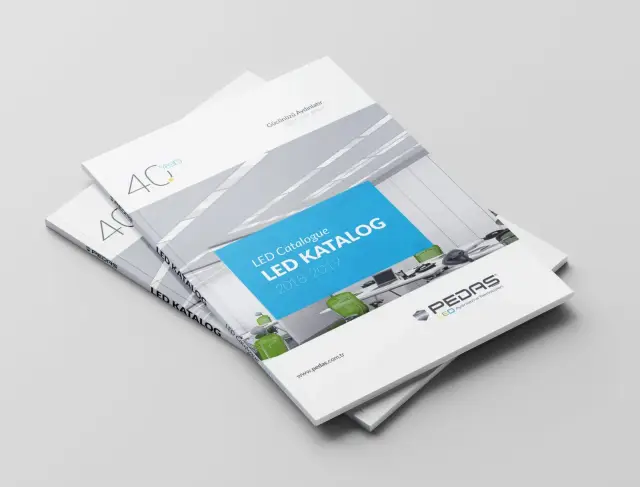
Below are catalogue, channel and social media productions. Each detail page states the scope.



How it runs
01
Reading the brand
Existing materials and any brand guideline are reviewed. That becomes the measure for monthly production: every job ties back to that language.
02
Scope and capacity
Which job types are included, how many run at once, how delivery and revisions work — all written down.
03
Queue
Requests enter in one place; order and status are visible to both sides.
04
Production
Design, revisions and channel adaptations, in order.
05
Monthly summary
At month end, what was produced and what remains in the queue is shared in writing.
What I don't do
Capacity is the most misunderstood part of a monthly arrangement, so I state it plainly.
- I don't offer “unlimited design”. Every capacity has a limit; a party that doesn't write the limit into the agreement is hiding it in the queue. How many jobs run at once is written down up front.
- I don't commit to a fixed number of jobs per month: job sizes vary too much. What's committed is concurrent capacity and the ordering rule.
- I don't shoot photography or video.
- I don't take on printing procurement; I deliver print-ready files.
- If a job type outside the scope comes up, I don't add it quietly; it's discussed separately.
Frequently asked
- How many jobs per month?
- I don't give a fixed number, because one social post and a forty-page catalogue aren't the same job. What's written down is concurrent capacity: how many jobs run at once and how the order is set. A number sounds precise but loses its meaning in the first busy month.
- How is this different from “unlimited” offers?
- There's no such thing as unlimited capacity. In that model the limit sits in the queue rather than the agreement: work piles up, delivery slows, and the difference shows in the third month. I'd rather write the limit down at the start — so we both know what a busy month looks like.
- What happens if something urgent comes up?
- The order changes, and that has a cost: the job in front waits. Which job an urgent request displaces is stated plainly. In an arrangement where everything is urgent, there's no order left at all.
- Do we get the source files?
- Yes. Source files are delivered in an organised way; being able to pick a job back up a year later is part of the work.
- We have an in-house designer. Is this still useful?
- That's the common case. Monthly support doesn't replace the in-house team; it takes the overflow and keeps the brand language coming from one place. The internal team focuses on the campaign while routine production enters the queue.
- How is the project estimate scoped?
- Recurring needs, original work, adaptations, feedback owners and priorities are agreed. A monthly fee does not mean unlimited simultaneous delivery of every possible task. The current fee and model are explained on the Ongoing Creative Partnership page.
Guides on this subject
Handing Company Work to a Freelance Designer
When handing work to a freelance designer, prepare the company's information and decision flow as well. External capacity does not automatically repair an unclear approval process.
Managing Requests and Approvals in Monthly Design Support
For a company with ongoing design needs, scattered requests can be a bigger problem than production volume.
Which Responsibilities Stay with Your Company in a Creative Partnership?
External creative support does not mean every internal decision moves outside the company.
Design Subscription, Agency or Freelancer?
The three answer different needs. The decision turns on volume, how much the brand language must be protected, and who decides internally.
What Does a Creative Director Do, and When Should You Outsource One?
A creative director's job isn't making the design; it's making the design decision and defending it. The role most often missing even in companies with in-house teams.
Related services
Let's talk about your annual production
Let's see how much work comes up per month and which types repeat; capacity gets written from that.
Tell me your production needsFOR BRANDS WITH REGULAR DESIGN NEEDS
Ongoing Creative Partnership
Creative direction, regular design production and a clear work plan. A monthly working arrangement for your brand’s changing needs.