
 selcukaker
Packaging design for brand and shelf impact
Packaging is where a brand touches the customer most closely: chosen in two seconds on a shelf, then sitting at home for days. But half of the design isn't visual, it's technical — dieline, material, print method and mandatory information shape surface decisions as much as aesthetics do. At Creative House the two run together. A packaging design brief should include the product family, dieline and print conditions. I consider both shelf differentiation and consistency across variants; the responsible parties must verify mandatory product information.
Who this is for
- Brands launching a new product and building its packaging from scratch.
- Companies whose packs stopped resembling each other as products multiplied.
- Manufacturers who feel indistinguishable from competitors on the shelf.
- Anyone entering export markets who needs to rework pack information.
What I usually find
- Each product was designed at a different time; on the shelf they don't look like a family.
- Mandatory information was squeezed in afterwards and breaks the design.
- The dieline arrived after the design; surface elements land on fold lines.
- Variants are separated by colour alone, and the colours converge in print.
- The brand isn't readable on the small pack; the design was only considered at large size.
Scope and deliverables
Agreed together, based on product and variant count.
- Surface design: the visible face of the pack, tied to the brand guideline.
- Variant system: how products separate and how they stand as a family.
- Information hierarchy: the three things a customer reads first on the shelf.
- Mandatory area plan: space for contents, warnings, barcode and producer details.
- Placement on the dieline: folds and glue areas accounted for.
- Scale test: readability checked on the smallest pack.
- Print preparation: colour profile, bleed and resolution.
- Source files: new variants can be derived from the system.
I make the call; the system speeds it up
Surface design, variant logic and information hierarchy are my decisions, and the final design comes from me.
Meet the AI teamPackaging work
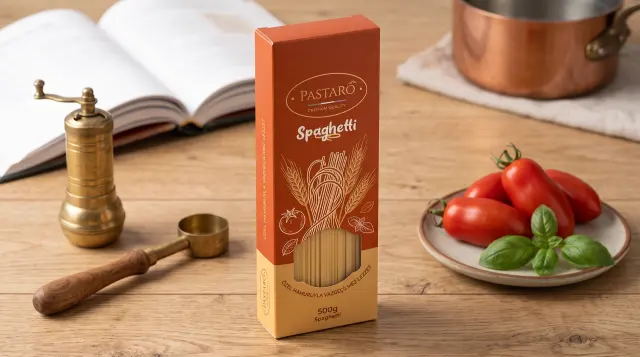
The collection below is made of real packaging and carton designs. Each piece can be seen individually on the detail page.
How it runs
01
Reading the product and shelf
The product family, its variants and what sits beside it on the shelf are reviewed.
02
Technical ground
Dieline, material, print method and mandatory information are taken up front. The design is built on those rather than squeezed in afterwards.
03
Surface
Visual direction and information hierarchy are designed; variant logic is set here.
04
Scale test
Readability is checked on the smallest pack.
05
Print preparation
Files are delivered after colour, bleed and resolution checks.
What I don't do
Naming what's out of scope early prevents surprises on production day.
- Dieline design and structural packaging engineering aren't my work; I work to the dieline supplied by the packaging producer.
- Material selection and shelf-life testing are out of scope.
- The content and regulatory compliance of mandatory information stays with you — I make room for it, I can't verify it.
- I don't take on printing procurement; I deliver print-ready files.
- I don't shoot product photography.
Frequently asked
- Do you prepare the dieline?
- No. The dieline is the packaging producer's work and varies by material and machine. I design onto it. If there isn't one yet, a standard size can carry the work — but it needs checking once the producer is known.
- How do you separate variants?
- Separating by colour alone is risky: tones converge in print and colour-blind customers can't tell them apart. Colour, form and type are used together, so the distinction survives print conditions.
- Mandatory information breaks the design — what can be done?
- It breaks the design because it's usually squeezed in afterwards. Given a defined area from the start, it becomes part of the layout. The accuracy and regulatory compliance of the content stays with you — I make room, I can't verify the text.
- Does packaging need to change for export?
- Usually yes, but not the whole design: mandatory information, units and some claims change by market. If the system is built for that from the start, each market doesn't need a redesign.
- How is the project estimate scoped?
- Products, variants, supplier dielines, materials, printing methods and approved product information define the scope. Adapting a variant differs from designing a new product family. Sampling, printing and regulatory checks are planned separately.
Guides on this subject
Planning Packaging Evaluation Before Redesign
Before redesigning packaging, decide which problem the evaluation must investigate. Brand, sales and production teams can otherwise judge the same proposal using incompatible criteria.
Managing Copy Approval for Food Packaging
Track copy approval separately from visual approval when producing food packaging. Keep evidence that the correct version has been prepared for the right product and market.
Opening and Return Experience in Ecommerce Packaging
In ecommerce packaging, the first opening is only one part of the experience. Product protection and possible repacking should be considered alongside the visual presentation.
Connecting a Packaging Brief with Procurement and Production
Packaging for a new product range cannot be completed by marketing alone.
What Does Print-Ready Mean? A Checklist Before Sending to the Printer
Colour profile, bleed, resolution and embedded fonts. Almost every surprise at the printer traces to one of these four.
What Is the Difference Between SEO and GEO?
SEO supports discovery in search; GEO describes work aimed at accurate representation in generative answers. A service-page example shows where they overlap and how to evaluate progress.
Related services
Let's look at the product family together
Let's talk about how many products, how many variants and which pack types.
Send the packaging scope