
 selcukaker
Websites that get found and bring customers, not just ones that look good.
A corporate site's job isn't to be admired; it's to find the right person, take them to the right page and get them to act. At Creative House a web project doesn't start with design: first we work out which questions the site has to answer and how the pages connect. Design, development, speed, the search side and measurement build on that — and because they sit in one team, none of it gets bolted on afterwards.
Who this is for
- Organisations with an ageing site that struggles on mobile and can't be updated without outside help.
- Companies whose site is live but where visitors don't know what to do and the contact form stays empty.
- Brands that have refreshed their identity and want it reflected properly in digital.
- Teams who want the site to keep being developed after launch.
What I usually find
- The menu describes the organisation's internal structure rather than what visitors are looking for.
- The homepage says everything and nothing clearly.
- Images aren't optimised, so pages load slowly on mobile connections.
- There's no content management; changing one line of text means waiting on an agency.
- Measurement was never set up, or was set up and nobody looks at it.
- The site misidentifies itself to search engines: repeated titles, missing canonicals.
Scope and deliverables
Which items apply is agreed together, based on the size of the project.
- Strategy: who the site speaks to, what it says, and the step expected from a visitor.
- Content architecture: page list, menu structure, URL scheme and the plan for linking pages together.
- UI/UX design: flow, wireframes, interface design and mobile behaviour.
- Development: building the pages and setting up content management.
- Speed: image optimisation, load order and removing unnecessary weight.
- Technical SEO: title and description scheme, canonicals, sitemap, language tags, structured data.
- Accessibility: colour contrast, keyboard navigation, touch target size and screen-reader labelling.
- Measurement: defining goals and making them reportable.
- Post-launch development: regular improvement guided by measurement.
I make the call; the system speeds it up
Page structure, interface and how the brand stands in digital are my decisions, and the final design comes from me. The AI team reads competitors and the sector, prepares content drafts, runs technical audits and collects post-launch measurement. The project moves faster without the design decision fragmenting.
Meet the AI teamCorporate web work
Below are corporate site projects where I led design and interface. Each detail page states the scope and my role.
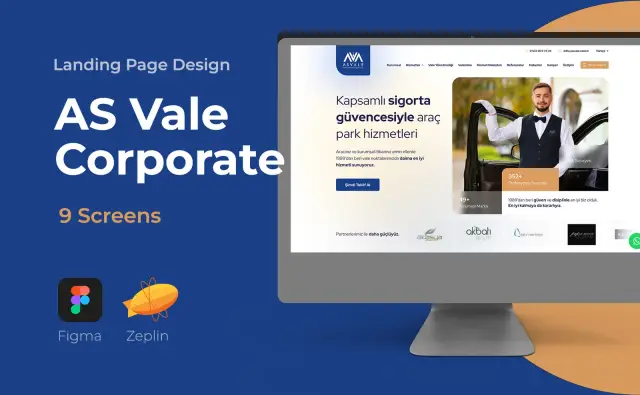
Website
AS Vale Corporate Website
A clean, service-led corporate site for valet and car park services.
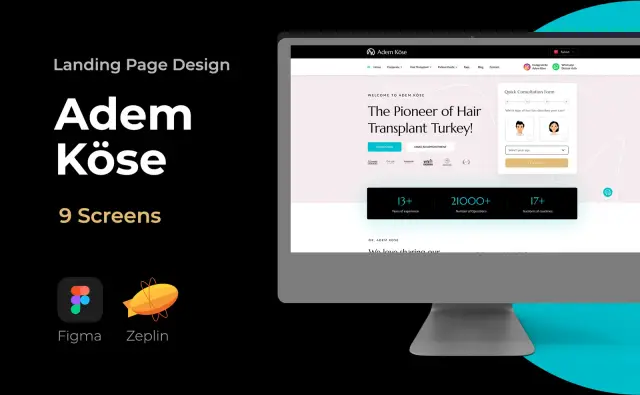
Website
Adem Köse Hair Transplant
A reassuring, conversion-focused landing page for a hair transplant clinic, built to drive appointments.
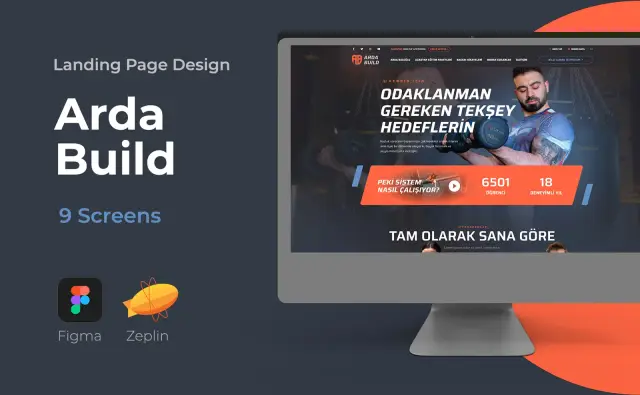
Website
Arda Build Fitness Trainer
An energetic landing page for a fitness coach, foregrounding programmes and the membership flow.
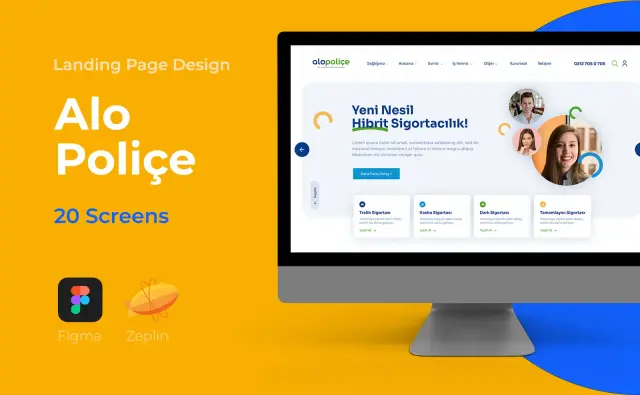
Website
Alo Poliçe
A landing page for insurance policy management that simplifies quoting and tracking.
Website
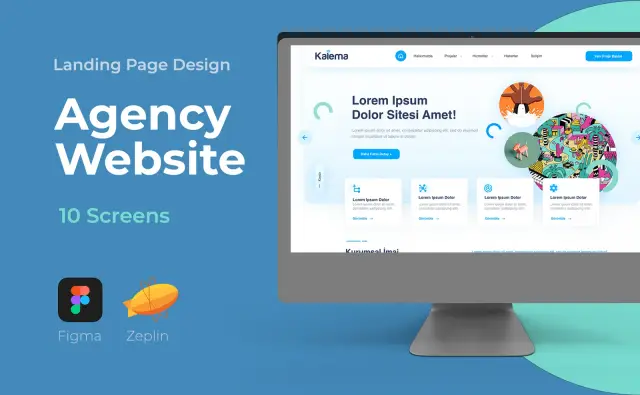
Agency Website
A modern corporate site for a creative agency, foregrounding its services and work.
How it runs
01
Discovery
The existing site, the audience and competitors are reviewed; the questions the site must answer are listed.
02
Architecture
Page list and menu structure are produced. Before design starts, it's clear why each page exists.
03
Design
Flow, wireframes and interface. Desktop and mobile are drawn together, not adapted later.
04
Development
Build, content management and speed work.
05
Launch and measure
Launch follows technical SEO and accessibility checks; measurement is set up and regular improvement begins.
What I don't do
Saying what's out of scope up front beats disappointment later.
- I don't promise a specific technology or platform before seeing that it suits the project.
- I don't commit to integrating with a third-party system before confirming that system allows it.
- I don't commit to visitor numbers or conversion rates.
- Server and infrastructure management is outside this page's scope; hosting is discussed separately.
- I don't recolour a stock template and call it delivered.
Frequently asked
- Which platform do you use?
- The platform is chosen per project; naming one in advance wouldn't be honest. Once we've established what the site must do, who will manage the content and how you expect it to grow, we discuss the options with reasons.
- Will we be able to update content ourselves?
- Yes, content management setup is in scope. Which fields are editable is decided together during design — making everything editable tends to break the design, so the limits are drawn deliberately.
- Can you rebuild our existing site?
- In most cases yes. The existing content and URL structure are mapped first; permanently redirecting old addresses to their new counterparts is part of the job, otherwise the value built up on the search side is lost.
- What happens after launch?
- Regular improvement continues, guided by measurement: pages that are missing, sections that slow down, places where visitors get stuck. A corporate site is something you keep tending, not something delivered once.
- Can we take design only and build it ourselves?
- Yes. In that case the delivery is design files plus the sizing and behaviour notes prepared for your developer. If you build it, post-launch speed and technical SEO outcomes stay on your side.
Related services
Let's talk about the project
Let's clarify where your current site stands and what the new one actually needs to solve.
Book a call